
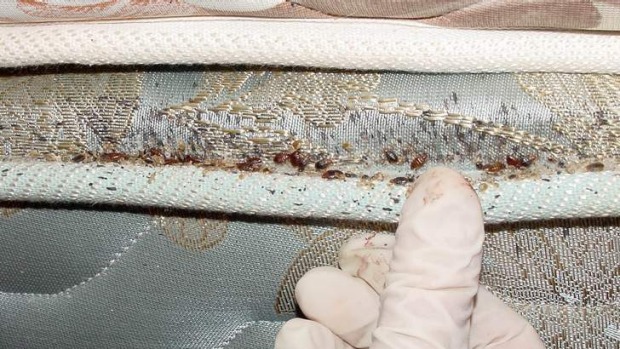
These nasty little critters are probably the most detested of all pest species. There used to be a stigma around bed bugs that suggested their presence indicates dirty and unhygienic living areas. This isn’t the case as bed bugs are not attracted to filth, they exist purely to feed from human blood and reproduce. The difference is that it is much easier to eradicate bed bugs from a premises that is clean and uncluttered as it’s easier to get to all the nooks and crevices that the bugs house themselves in.
The main reason for controlling bed bugs is that they bite. Although there are no known disease risks associated with bed bug bites, they can cause acute irritation and distress. Everyone reacts differently to a bed bug bite; some develop red, irritating marks and lumps, while others do not react to the bites. Bed bugs also cause mental distress and can, in extreme cases, lead to ongoing delusional parasitosis, even after successful treatment has eradicated the infestation.
They are more prevalent in densely populated areas or buildings, particularly in multi-occupancy buildings with rapid resident turnover, for example, hostels, hotels, holiday camps and blocks of flats. However, despite their namesake, they are not limited to your sleeping area. They will infest crevices in the surrounding furniture, behind skirting boards, under loose wallpaper, behind pictures and even in plug sockets, to name just a few places. In short, bed bugs can generally thrive anywhere there is a food source – blood – and they will always hide in places close to that next meal.
If you experience any of the following, you may have bed bugs:
- Red, irritating bites, typically in rows on your neck, shoulders, back, legs or arms
- Small reddish-brown clusters or dark faecal spots (about 1mm wide) that look like an ink dot are usually found on the bed frame, upholstery or the bottom side of the mattress
- Small blood smears on the bed linen or headboard
- Bed bug moult skins, pale-white eggs, empty eggshells are quite small but still visible to the human eye
- And the most obvious but not always the first sign you find – seeing the small brown insects themselves, in and around your bed frame or sleeping area.
Bites alone, without further evidence, do not necessarily mean you have an infestation. Look for these other signs and if you’re unsure, call in a pest professional.
We will first of all offer a free survey to inspect your premises to understand the extent of the problem. We can then advise the treatment process, what needs to be done in preparation, what safety precautions need to be undertaken and how many visits we will likely need. The treatment consists of a variety of techniques combining the use of toxic and non-toxic products to achieve the desired result. Bed bugs are notorious for becoming resistant to certain insecticides so a full Integrated Pest Management approach is warranted.
Click here to enquire about EnviroShield bed bug pest control services.
 EnviroShield Pest Management - Bishops Stortford