
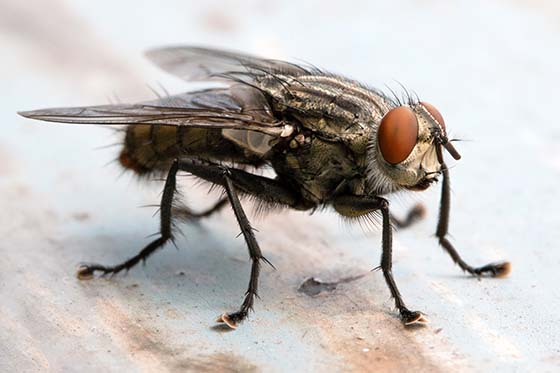
Probably the most common fly infestation that we deal with are Cluster flies. These are dark greyish flies about 8mm long with yellowish hairs on the back and with overlapping wings. In autumn they congregate in large numbers in upper rooms or roof spaces of houses to hibernate. They will then reemerge in Spring to seek out egg laying sites outside. A mass of cluster flies has a characteristic smell. They are sluggish in flight and are a nuisance in the house. The larvae of one species are parasitic upon certain earthworms, so this species is more common in rural areas.
We use insecticidal fogs or smoke generators to clear infestations. Cluster flies may return to the same location year after year. There is little you can do as prevention against these flies as they don’t feed or lay eggs inside your property, they are there solely to hibernate over winter to emerge in spring. It is quite common for the need to perform one treatment in a particular property every year around about autumn time to control these pests.
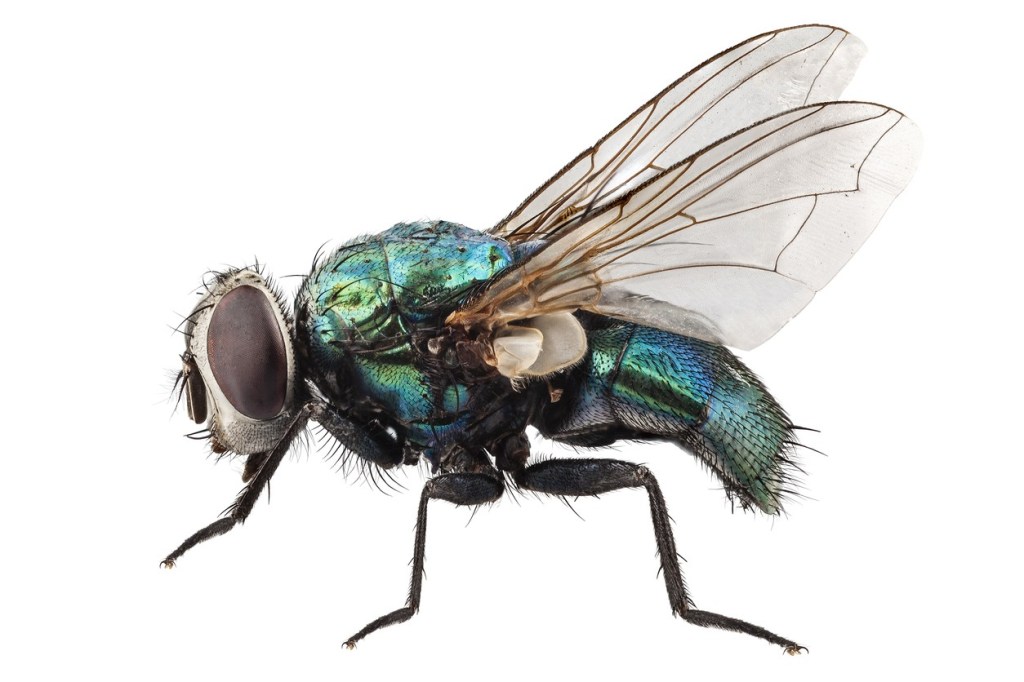
Another ever present pest in households is the Blow fly. The term Blow fly is a general description of a number of species of large buzzing flies, which include the Bluebottle, the Greenbottle and the Flesh Fly.
Blow flies are so called because they were believed to “blow” their eggs, or larvae onto exposed meats. They all like sunlight and are attracted to meat or carrion, and all may be found around dustbins in hot summer weather.
Flies are widely recognised as carriers of disease-causing organisms, and their high mobility makes them particularly effective vectors. We highly recommend that you seek the help of professional pest technicians such as ourselves if you think that you have a Blow fly problem as they can be quite distressing when in numbers and are bad for your reputation as a business. Their presence could also indicate further problems, such as a dead rodent or bird in your building. Only by locating and removing these sources will you rid the problem.
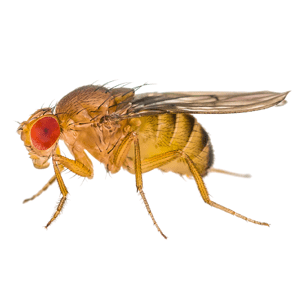
The other commonly problematic fly is the Fruit fly. A family of very small (about 3mm) flies, some with prominent red eyes, characterised by a slow hovering flight in which the abdomen hangs down. All are associated with rotting fruit and vegetables or fermenting liquids. One species breeds in sour milk, for example, in the residue of forgotten milk bottles.
The key thing with treating fruit flies is to find the source of the problem and removing it. Remove all empty bottles or cans, and check for rotting fruit, vegetables or pools of spilt liquid. Also empty and clean out bins. If the infestation is vast or particularly distressing we can perform an insecticidal fog spray but unless the source is cleared out, the problem is likely to return.
Click here to enquire about EnviroShield fly pest control services.
 EnviroShield Pest Management - Bishops Stortford