
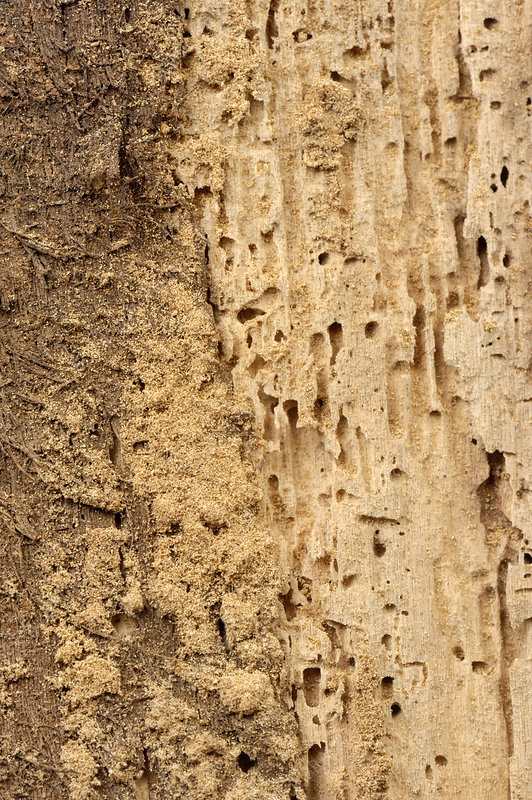
Woodworm is a generic term used for the larvae state of a number of different wood-boring beetles.
One such species of these wood-borers is the Common Furniture Beetle. The first sign of woodworm is the appearance of neat round holes, 2mm across, in wooden surfaces, often accompanied by tiny piles of wood dust beneath them. Fresh holes show clean white wood inside. Emerging adult beetles make the holes. Immature grubs may still be tunnelling away inside the wood.
The adult Furniture Beetle is a small brown insect 3mm to 6mm long which flies quite readily. It lays eggs on rough, unpolished wood and the grubs bore straight into the wood – leaving no trace until they emerge as beetles three years or so later, usually between May and September.
Woodworm is frequently introduced into the house in second-hand furniture, tea chests or wicker-work; but the beetles are quite capable of flying in through a window from nearby dead branches of trees. They may then attack floorboards, joinery and, more seriously, structural timbers such as rafters and joists.
Other wood borers include:
- Death Watch Beetle, which infests only large old hardwood beams
- House Longhorn, confined – at least for the moment – to North West Surrey
- Powder Post Beetle which needs a diet of starch in certain hardwoods
- Wood Boring Weevils, which are associated with wet rot and die out when it is treated.
Don’t take any chances with woodworm. Small isolated patches on furniture could be fixed with shop bought products, but a larger structural infestation requires the skills and experience of a professional pest technician. If you suspect live activity contact us now for a free survey. From there if treatment is required then we will quote based on the size of the property and whether floorboards need lifting etc, and go through the preparation process.
Click here to enquire about EnviroShield woodworm pest control services.
 EnviroShield Pest Management - Bishops Stortford